When a fire starts inside a building, the biggest danger is not always the flames. It is the heat.
In just a few minutes, fire temperatures can rise above 500°C. At that point, structural steel begins to weaken. It loses strength as it heats up and if it reaches around 550°C, it can lose nearly half of its load-bearing capacity. That is when bending and structural failure can begin.
This is why modern buildings have intumescent coatings. They keep structural steel safe during a fire and help buildings stay stable long enough for people to get out safely and for emergency responders to get to the scene.
If you are involved in commercial buildings, industrial facilities, hospitals, schools, or high-rise projects, understanding how intumescent coatings work is part of responsible construction planning.
What Are Intumescent Coatings?
Intumescent coatings are fire resistant paints used for structural steel fire protection. They are applied to beams, columns, and other load-bearing elements.
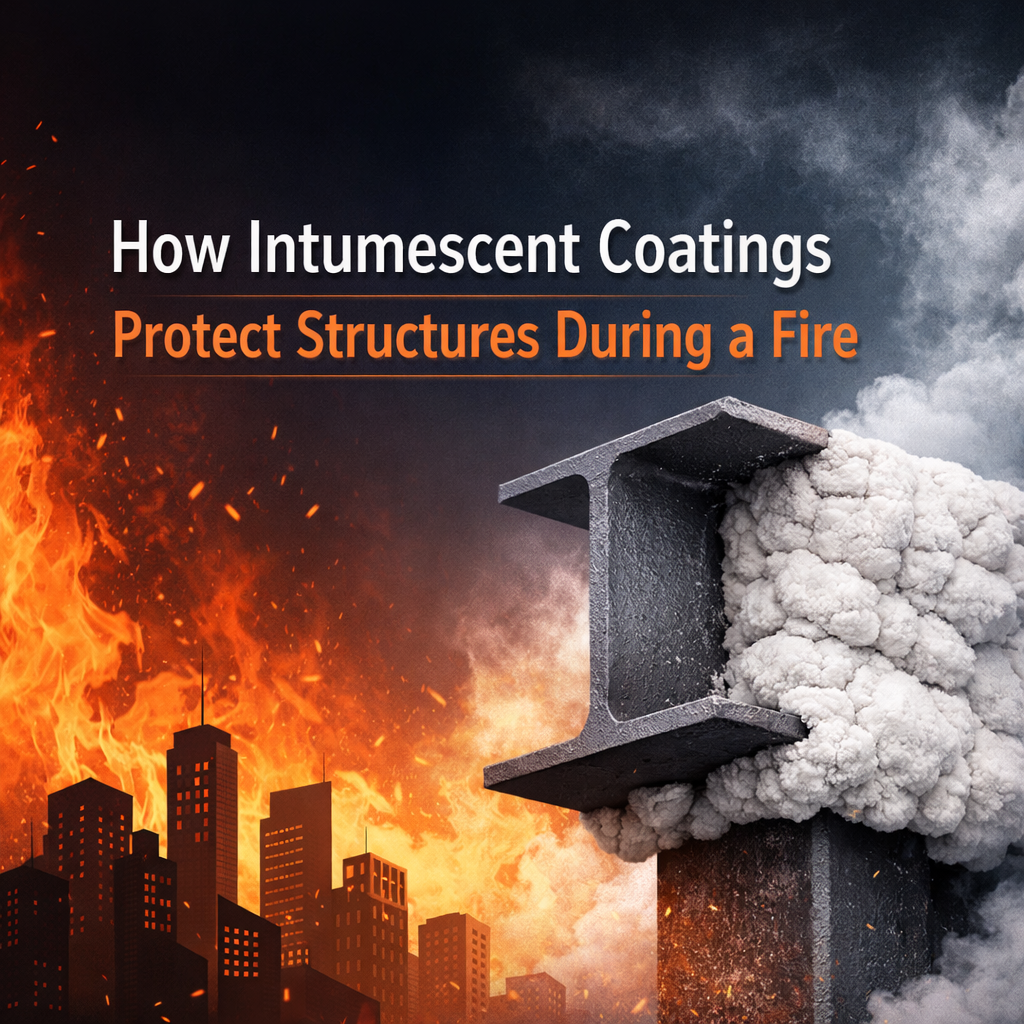
They look like normal paint to the naked eye, but their true effect shows during a fire. They expand and form a thick insulating char layer. This layer slows down heat transfer to the steel underneath.
They are called passive fire protection since they don’t need electricity, alarms, or water to work. When they get exposed to high heat, they automatically respond.
Most of the time, these coatings are tested and approved to protect against fire for 30, 60, 90, or 120 minutes.
What Does Intumescent Mean?
Intumescent means swelling when exposed to heat.
When temperatures reach around 200°C to 250°C, the coating activates. A thin dry film thickness of a few millimeters can expand many times its original size. It turns into a thick foam-like barrier.
This barrier sticks to the steel and makes a char that is high in carbon. The char slows down the transfer of heat and keeps the structure safe.
How Do Intumescent Coatings Work During a Fire?
The protection process follows clear stages.
1. Heat activation
The coating becomes active when the fire heats up. It stays stable during normal use and reacts only under extreme heat.
2. Expansion
As part of a chemical reaction, the coating lets out gases. These gases make the material swell up quickly. A tiny layer of paint turns into a thick barrier that protects.
3. Char formation
The expanded material turns into a layer of solid char. There are air spaces in this char Air slows down the transfer of heat, which makes steel take longer to heat up.
4. Slowing structural failure
Around 400°C, steel starts to lose strength, and it gets a lot weaker around 550°C. The intumescent coating maintains the steel below its critical temperature for a longer duration by slowing down the transfer of heat. This helps the building stay stable during an evacuation or emergency response.
Where Are Intumescent Coatings Commonly Used?
Intumescent fireproof paint is used across many sectors.
Commercial buildings
Office towers, malls, airports, and high-rise buildings often use exposed steel for design. Intumescent coatings protect the structure while keeping the clean, visible finish.
Industrial facilities
Steel frames are important for factories and warehouses because they can hold big tons of weight. Fire-resistant coatings help prevent structures from falling apart during a fire. Intumescent coatings that are fire certified for hydrocarbons are used at oil and gas sites because such fires burn hotter and faster.
HVAC duct penetrations
Intumescent materials expand during a fire and close openings when ducts go through fire-rated walls. This helps keep fire from spreading and keeps fire compartments separate.
How Long Can Intumescent Coatings Protect a Structure?
The thickness of the product and its type determine how long it will protect against fire.
Common fire resistance ratings include:
- 30 minutes
- 60 minutes
- 90 minutes
- 120 minutes
These ratings are based on regular fire tests that follow ASTM or EN rules. The steel must stay below its critical temperature for the amount of time it is rated for during testing.
When used correctly, intumescent coatings can last for many years in dry indoor spaces. A protective coating helps keep moisture and rust out when it’s wet or outside.
Regular checks help keep things in line and working well.
What Affects Intumescent Coating Performance?
Performance depends on several practical factors:
- Proper surface preparation of steel
- Use of compatible primer
- Correct wet and dry film thickness measurement
- Suitable temperature and humidity during application
- Protection from impact damage after installation
Conclusion
Intumescent coatings keep structural steel safe by expanding when heated and creating a layer of char that keeps heat out. This slows down the transfer of heat, which keeps structures from losing strength too quickly and helps them satisfy the required fire resistance ratings.
If you are planning a commercial, industrial, or public building project, fire protection should be planned from the start, not added later.
Zahabiya provides high-performance intumescent coatings designed for certified structural steel fire protection. If you want clear guidance on product selection, required thickness, or fire rating compliance, speak with our team today. A short conversation now can protect your entire structure for years to come.
FAQs
1. How do you choose the right intumescent coating thickness?
The thickness depends on how long the steel needs to resist fire, such as 30, 60, 90, or 120 minutes. It also depends on the size and shape of the steel section. An engineer calculates the required dry film thickness based on fire test results. Using the correct thickness is important to meet safety standards.
2. Can intumescent coating be applied to existing buildings?
Yes, it can be used on both new and existing steel structures. The steel must be properly cleaned and primed before application. If the surface is not prepared correctly, the coating may not stick well or perform as expected during a fire.
3. Is intumescent coating waterproof?
Most standard intumescent coatings are made for indoor use. If the steel is exposed to moisture or outdoor weather, a protective topcoat is needed. This extra layer helps protect the system from water, humidity, and corrosion over time.