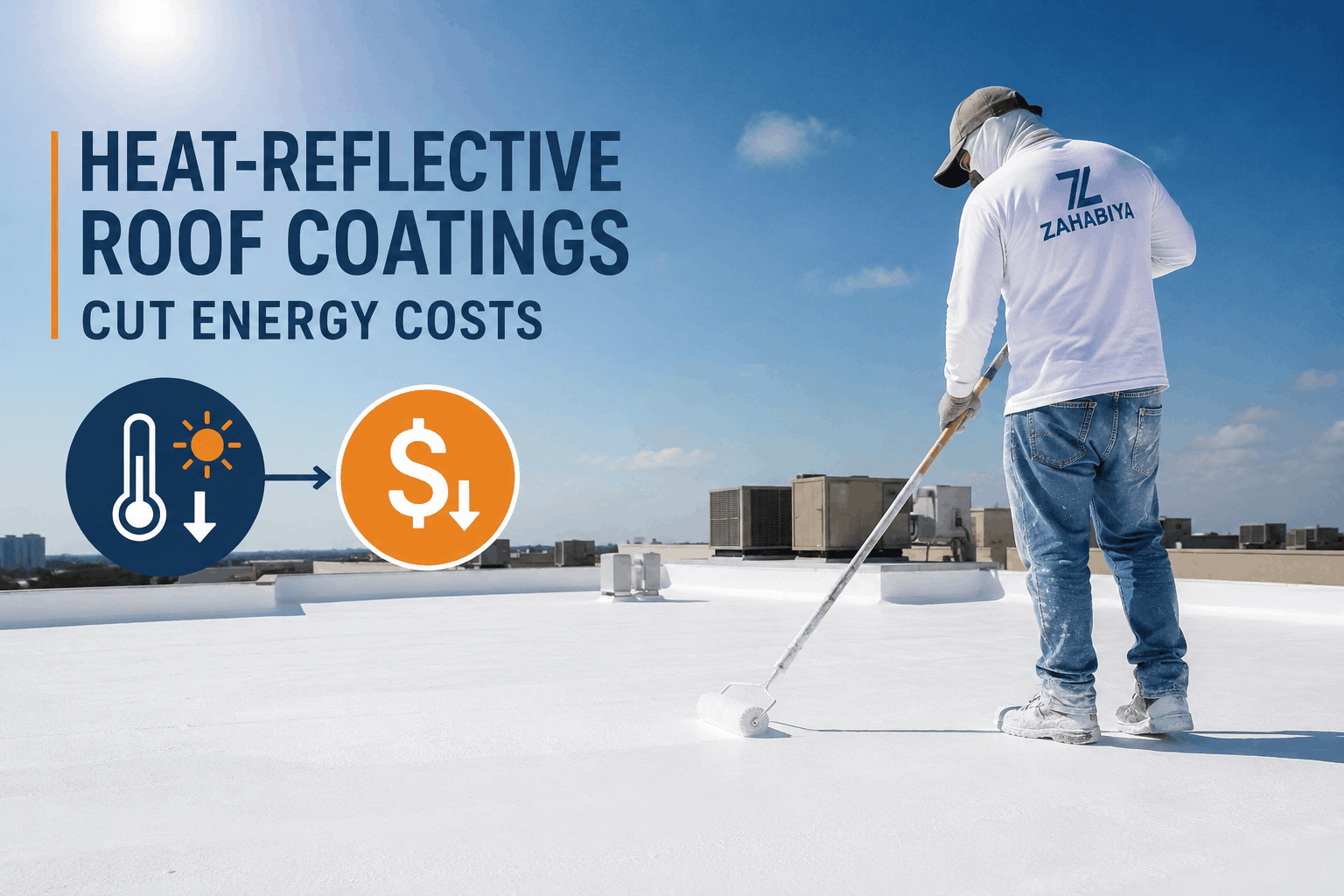
During summer, rooftops absorb heat for hours without a break. By afternoon, roof surfaces can become extremely hot, especially in cities and areas with strong sunlight. That heat slowly moves inside the building and makes rooms feel warmer, especially on upper floors.
This is one reason air conditioners struggle during hot weather. Even when the AC keeps running, the roof continues pushing heat into the building. Electricity bills rise month after month as cooling systems work harder.
Heat-reflective roof coatings help reduce this problem by lowering roof surface temperature and reducing heat absorption. These coatings reflect sunlight away from the roof and help buildings stay cooler during the day. Homes, factories, warehouses, offices, and commercial buildings can all benefit from better indoor comfort and lower cooling costs.
What Are Heat-Reflective Roof Coatings?
Heat-reflective roof coatings are special coatings that reduce heat buildup on rooftops. Unlike normal roof paint, these coatings are made with reflective materials that help bounce sunlight away from the surface.
When sunlight hits a regular roof, most of the heat gets absorbed into the structure. A reflective roof coating reduces that heat absorption. This helps lower the roof temperature and slows down the amount of heat entering the building.
These coatings are commonly used on concrete roofs, metal roofs, industrial sheds, warehouses, and commercial rooftops. In hot climates, they are often used as part of an energy-saving roof solution.
Another useful feature is thermal emissivity. This simply means the roof can release heat faster instead of storing it for long hours. As a result, buildings cool down faster during the evening.
Why Roofs Become So Hot
Roofs receive direct sunlight throughout the day, making them one of the hottest parts of a building. Dark roof surfaces absorb even more heat because darker colors trap sunlight instead of reflecting it.
Concrete roofs hold heat for long periods. Metal roofs heat up quickly and transfer heat indoors faster. In many buildings, the roof stays warm even after sunset because the surface continues releasing stored heat.
This is why top-floor rooms usually feel hotter than lower floors. Bedrooms, offices, and storage spaces under the roof often become uncomfortable during peak summer hours.
In crowded urban areas, the situation becomes worse because roads, walls, glass, and nearby buildings also release heat into the surroundings. This raises the temperature of the entire area.
Heat Buildup Inside Buildings
As the roof temperature rises, heat slowly enters the building through ceilings and walls. Indoor temperatures increase throughout the day, forcing air conditioners and cooling systems to run longer.
Large buildings with wide roof areas usually face bigger heat problems. Warehouses and factories often struggle with high indoor temperatures because of exposed metal roofing and poor roof insulation.
Why Traditional Roofs Increase Cooling Costs
Traditional roofs absorb heat continuously during the day. This creates extra pressure on cooling equipment because air conditioners have to remove that heat repeatedly.
When the roof remains hot for hours, the AC compressor runs more often and uses more electricity. Over time, this increases energy bills and puts more strain on HVAC equipment.
How Heat-Reflective Roof Coatings Work
Heat-reflective roof coatings reduce heat through reflection and faster heat release.
Reflecting Sunlight Away From the Roof
The coating reflects a large portion of solar radiation before the roof can absorb it. This helps reduce surface temperature during hot afternoons.
Light-colored roof coatings usually perform better because they reflect more sunlight. White reflective roof coatings are commonly used on factories, warehouses, and commercial buildings for this reason.
Reducing Heat Absorption
When less sunlight gets absorbed, the roof stays cooler throughout the day. Lower roof temperatures help reduce indoor heat transfer and improve cooling performance inside the building.
Even a noticeable drop in roof surface temperature can help rooms feel more comfortable during summer.
Releasing Stored Heat Faster
A reflective roof coating also helps release trapped heat more quickly after sunset. Traditional roofs can continue radiating heat late into the evening, but reflective coatings help reduce this effect.
This helps indoor spaces cool down faster during nighttime hours.
How Heat-Reflective Roof Coatings Reduce Energy Costs
Air Conditioners Run Less Often
Cooler roofs reduce indoor heat buildup, which means air conditioners do not need to operate continuously. Rooms maintain comfortable temperatures for longer periods, reducing cooling load on the system.
This is especially useful in buildings where AC units normally run for long hours every day.
Lower Electricity Usage
Cooling systems are usually one of the highest electricity consumers during summer. When indoor spaces stay cooler naturally, less energy is needed to maintain room temperature.
Reflective roof coatings can help reduce electricity bills by lowering the amount of heat entering the building.
Better Cooling Performance
In buildings with hot roofs, air conditioners often struggle to cool rooms quickly. A cooler roof helps indoor temperatures stabilize faster, improving overall comfort during the day.
Many people notice that upper floors become easier to cool after applying a heat-reflective roof coating.
Reduced Pressure on HVAC Equipment
Continuous operation increases wear on cooling systems. Lower indoor heat helps reduce pressure on HVAC units, compressors, and cooling parts. This may help reduce maintenance costs over time.
Benefits for Different Types of Buildings
Homes and Apartments
Top-floor bedrooms and living spaces often become very hot during summer afternoons. Reflective roof coatings help reduce indoor heat and improve comfort during both day and night.
Commercial Buildings
Offices, shops, and commercial buildings can reduce cooling expenses by lowering roof heat absorption. Employees and customers also benefit from a more comfortable indoor environment.
Factories and Warehouses
Industrial buildings usually have large roof surfaces that absorb significant heat. Reflective industrial roof coatings help reduce indoor temperature buildup and improve working conditions.
Lower heat levels can also help protect machinery, stored products, and equipment from excessive heat exposure.
Extra Benefits Beyond Energy Savings
Heat-reflective roof coatings also help protect the roof surface from weather damage.
Many coatings provide waterproofing protection that helps reduce roof leaks and moisture problems. This becomes useful during heavy rain and changing weather conditions.
Heat can also cause roof surfaces to expand and shrink repeatedly. Over time, this may create cracks in concrete roofs. Reflective coatings help reduce surface temperature and lower the stress caused by constant heating and cooling.
UV rays from sunlight slowly damage exposed roof surfaces. Reflective roof coatings add another layer of protection against sun damage and roof aging.
Conclusion
Heat-reflective roof coatings help reduce roof temperature, lower indoor heat buildup, and improve cooling efficiency during hot weather. By reducing heat absorption, these coatings help air conditioners work more efficiently and lower electricity usage.
They also help protect roofs from water damage, UV exposure, cracking, and long-term heat stress.
Zahabiya Chemicals offers SOLABLOK RC-211, a heat reflective roof coating that reduces roof heat, lowers indoor temperatures and helps minimize cooling expenditures during hot weather. It delivers waterproofing and UV protection and is compatible with both metal and concrete roofs. Throughout the year, SOLABLOK RC-211 helps to create a cooler and more comfortable indoor atmosphere for residences, factories, warehouses, and commercial buildings that are exposed to strong sunshine.
If your roof is too hot in summer or temperatures are rising, SOLABLOK RC-211 can increase comfort and protect your roof. Contact Zahabiya Chemicals today to find the correct heat reflective waterproofing for your place today!
FAQs
How much can a heat-reflective roof coating reduce roof temperature?
A high-quality heat-reflective roof coating can reduce roof surface temperature significantly during peak sunlight hours. The exact reduction depends on roof material, weather conditions, and coating quality. Cooler roof surfaces help reduce indoor heat buildup and improve the overall comfort inside a place.
Do heat-reflective roof coatings work during humid weather?
Yes, reflective roof coatings still help reduce heat absorption in humid climates. Humidity may affect how hot the environment feels, but sunlight continues heating the roof surface. Reflective coatings help reduce the amount of solar heat entering even during humid conditions.
Can reflective roof coatings help old concrete roofs?
Reflective roof coatings are commonly used on older concrete roofs to reduce heat and improve roof protection. Many coatings also help cover small surface cracks and add a protective waterproof layer, which can help extend the life of aging roofs.
Do cool roof coatings reduce AC running time?
Yes, cool roof coatings can help reduce AC operating time by lowering indoor heat gain. When the roof absorbs less heat, rooms stay cooler for longer periods, allowing air conditioners to cycle less frequently during hot weather.