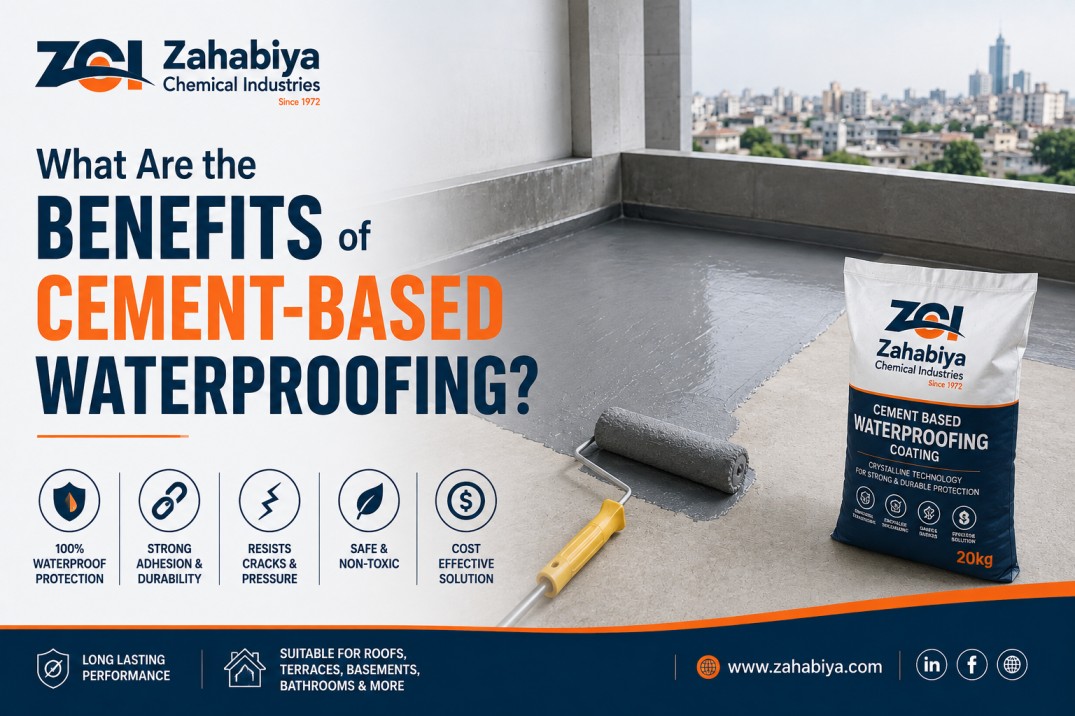
Quick Answer: Cement-based waterproofing reduces water absorption in concrete, prevents dampness, slows steel corrosion, and extends the life of structures like basements, water tanks, foundations, and bathrooms. It bonds directly into the concrete surface, tolerates slightly damp substrates during application, and is one of the few methods suitable for potable water tanks when certified for that use — making it a cost-effective default for most concrete waterproofing needs.
What Is Cement-Based Waterproofing?
Cement-based waterproofing is a protective coating made from cement, graded fillers, polymers, and waterproofing additives. It is applied directly to concrete and masonry surfaces to reduce water penetration.
Once it cures, it becomes part of the concrete surface and helps block water from moving through tiny pores inside the concrete. This protects the structure itself as well as the steel reinforcement hidden inside it.
Because it bonds naturally with concrete, cementitious waterproofing is one of the most widely used waterproofing methods for homes, commercial buildings, factories, and infrastructure projects.
How Does Cement-Based Waterproofing Stop Water Damage?
Concrete may look hard and solid, but if you could zoom in, you would see thousands of tiny pores across its surface. Water slowly finds its way through these openings whenever concrete is exposed to rain, groundwater, or standing water.
That moisture keeps moving deeper over time, which can lead to:
- Damp walls
- Peeling paint
- Mold and mildew
- Weak plaster
- Surface cracks
- Rusting steel reinforcement
A cement-based waterproofing coating seals many of these pores, making it much harder for water to travel through the concrete.
Think of it like wearing a raincoat. The rain still falls, but it does not soak into your clothes. Waterproofing works in a similar way by helping concrete resist water instead of absorbing it.
This is why cementitious waterproofing is commonly used in basements, foundations, terraces, balconies, water tanks, swimming pools, bathrooms, lift pits, and retaining walls.
Why Does Waterproofing Help Concrete Last Longer?
Concrete deals with changing weather every single day. Hot afternoons, cool nights, heavy rain, and humidity all affect it over time.
Water speeds up this process because it carries moisture deeper into the structure. Once water enters, it also brings salts and other harmful materials with it.
A good waterproof concrete coating helps reduce water movement, which slows many of the problems that shorten the life of concrete.
It helps protect concrete from:
- Weathering
- Erosion
- Carbonation
- Chloride attack
- Surface deterioration
Carbonation is a slow reaction between concrete and carbon dioxide in the air. When moisture is present, this reaction moves faster and makes steel reinforcement easier to corrode. Waterproofing slows that process by limiting the amount of water inside the concrete.
How Does Waterproofing Protect Steel Reinforcement?
Steel bars are placed inside concrete because they make the structure much stronger.
The problem starts when water reaches those steel bars.
As steel rusts, it expands. That expansion creates pressure inside the concrete until cracks begin to appear. If the problem continues, pieces of concrete can even break away from the surface.
A waterproof cementitious slurry reduces water permeability, making it much harder for moisture and harmful salts to reach the reinforcement.
That is why waterproofing is used in structures where repairs are difficult or expensive, including:
- Bridges
- Water tanks
- Foundations
- Parking structures
- Reservoirs
- Marine construction
- Industrial buildings
Why Does Cement-Based Waterproofing Bond So Well With Concrete?
Some waterproof coatings simply sit on top of the surface.
Cement-based waterproofing behaves differently. It forms a strong bond with the concrete after curing, helping the coating stay attached for a long time.
During repair work, concrete bonding adhesive, concrete bonding agent, or SBR bonding agent is also used before applying fresh mortar.
This helps old and new concrete stick together properly and improves the strength of the repair.
Where Can Cement-Based Waterproofing Be Used?
One reason this waterproofing method is so popular is because it works in many different areas of a building.
Some of the most common applications include:
- Basements
- Water tanks
- Swimming pools
- Bathrooms
- Balconies
- Terraces
- Foundations
- Lift pits
- Retaining walls
- Industrial floors
- Parking structures
- Machinery foundations
- Damp-resistant plaster
- Tile fixing and grouting
It is also used during renovation projects where older buildings need better protection against moisture.
Why Is Waterproofing Better During Construction?
Water damage usually begins long before you can actually see it.
By the time a wall starts showing damp patches or peeling paint, moisture has often been travelling inside the concrete for quite some time.
Adding cement-based waterproofing during construction helps stop water before it gets the chance to cause damage.
It also helps:
- Reduce future maintenance.
- Lower repair costs.
- Protect steel reinforcement early.
- Increase the life of the structure.
Preventing water damage is almost always less expensive than fixing it later.
How Does Cement-Based Waterproofing Perform in Damp Areas?
Some waterproofing products need completely dry concrete before they can be applied.
That is not always possible in places like basements, foundations, or underground walls.
Cement-based waterproofing works well even when the concrete contains slight moisture, making it a practical option for:
- Underground walls
- Basements
- Foundations
- Lift pits
- Water reservoirs
This helps projects move forward without unnecessary waiting.
How Does Cement-Based Waterproofing Help Reduce Rising Damp?
Not all moisture comes through roofs or outside walls.
In many buildings, water slowly moves upward from the ground through bricks, mortar, and concrete. This is known as rising damp.
Some common signs include:
- Damp patches near the floor
- Peeling paint
- White salt deposits
- Damaged plaster
- Musty smell indoors
Using cement-based waterproofing together with a polymer waterproofing additive helps reduce this upward movement of moisture and protects wall finishes from repeated damage.
How Does Waterproofing Protect Concrete From Salts and Chemicals?
Buildings near the coast, factories, and wastewater plants face another challenge besides water.
Moisture carries salts, chlorides, sulphates, and other chemicals into concrete. These materials slowly weaken the structure and increase the risk of steel corrosion.
A quality waterproof concrete additive reduces water permeability, making it much harder for these harmful materials to enter the concrete.
This protection is especially useful for:
- Coastal buildings
- Industrial facilities
- Marine structures
- Wastewater treatment plants
- Underground construction
Why Should Small Cracks Be Protected Early?
Concrete naturally develops tiny hairline cracks while it cures.
They may seem too small to matter, but water can still pass through them. As the concrete repeatedly gets wet and dries again, those small cracks can slowly grow larger.
Waterproofing helps reduce the amount of water entering these tiny openings.
If larger structural cracks are already present, they should always be repaired first because waterproof coatings are designed to stop water, not repair structural damage.
How Does Surface Preparation Affect Waterproofing Performance?
Even the best waterproofing product needs a clean surface to work properly.
Before applying any waterproof coating, the concrete should be:
- Clean
- Free from dust
- Free from loose particles
- Free from oil and grease
- Repaired where damaged
Following the recommended mixing ratio, application method, and curing time also helps the coating develop proper strength and bond securely with the concrete.
Taking time to prepare the surface properly can make a noticeable difference in how well the waterproofing performs over the years.
Engineer’s Insight: Why Certification Matters for Water Tanks
Not every cement-based waterproofing product is automatically safe for drinking water storage. For potable water tanks, the product must be specifically formulated and certified as non-toxic and safe for contact with drinking water — this is a regulatory as well as a technical requirement. Structural engineers typically recommend checking for explicit potable-water certification on the product data sheet rather than assuming general-purpose waterproofing products are suitable, since using an uncertified product in a drinking water tank can introduce health risks even if it performs well structurally.
Which Cement-Based Waterproofing Product Should You Choose?
Every construction project is different. A basement wall, swimming pool, industrial floor, and water tank all face different levels of moisture exposure.
Choosing a cement-based waterproofing solution, waterproof concrete additive, and concrete bonding agent designed for the job helps improve water resistance and overall concrete performance.
Products such as Concremight ZUBA-16/123 from Zahabiya Chemicals combine acrylic, SBR, and special co-polymeric resins to improve bonding, increase compressive and tensile strength, reduce water permeability, and protect concrete from weathering, erosion, corrosion, carbonation, chlorination, and salt exposure.
It is suitable for:
- High-strength concrete
- Water tanks
- Swimming pools
- Basements
- Damp-resistant plaster
- Industrial floors
- Machinery foundations
- Tile fixing
- Grouting
- Waterproof cementitious slurries
Conclusion
Water damage rarely appears overnight. It builds up slowly, and once it becomes visible, the repairs can take time and cost much more than expected. Choosing the right cement-based waterproofing from the beginning helps protect your concrete, reduce maintenance, and keep your project in better condition for years.
If you’re planning a new project or upgrading an existing one, Zahabiya Chemicals can help you choose the right solution. Products like Concremight ZUBA-16/123 are designed to improve bonding, water resistance, and concrete strength across a wide range of applications. Talk to our team today and get expert advice before your next pour or repair. The right waterproofing choice today can save you from major repairs tomorrow.
Frequently Asked Questions
1. How long does cement-based waterproofing last?
A properly applied cement-based waterproofing coating can last for many years. Its lifespan depends on the quality of the product, surface preparation, application method, and the conditions it is exposed to. Using high-quality waterproofing products and following the recommended curing process helps achieve longer-lasting protection.
2. Can cement-based waterproofing be applied on old concrete?
Yes. It works well on both new and old concrete as long as the surface is clean, sound, and free from loose particles, dust, oil, or damaged concrete. For repair projects, using a concrete bonding agent before applying fresh mortar or waterproofing helps improve adhesion.
3. Is cement-based waterproofing suitable for drinking water tanks?
Many cement-based waterproofing products are suitable for potable water tanks when they are specifically designed and approved for that purpose. Always check the manufacturer’s product specifications before using any waterproofing material in drinking water storage.
4. Can cement-based waterproofing stop existing water leaks?
It can help stop minor water seepage after proper surface preparation and crack repair. However, active leaks caused by large structural cracks, damaged joints, or high water pressure should be repaired first before applying a waterproof coating.