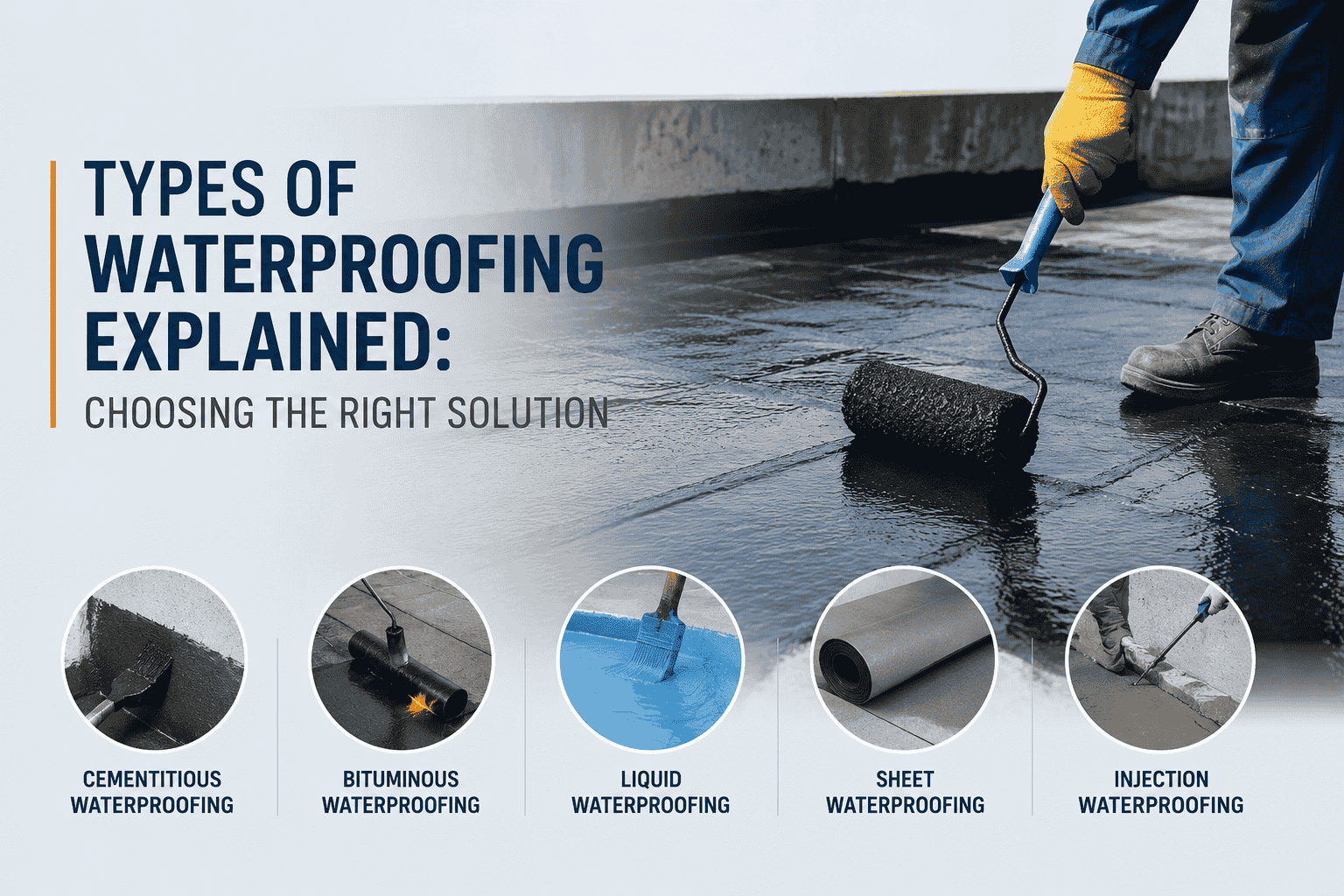
Waterproofing protects buildings from water seepage, roof leakage, damp walls, concrete damage, and peeling paint. Different areas of a building face different moisture conditions, so the waterproofing method should match the surface and environment.
A roof exposed to sunlight and rain needs a different waterproofing solution than a bathroom, basement, or underground concrete structure. Choosing the correct waterproofing coating helps reduce future repairs and improves the life of the building.
Acrylic Waterproofing
Acrylic waterproofing is one of the most commonly used roof waterproofing solutions for residential and commercial buildings. It is applied as a liquid coating and dries into a flexible waterproof membrane.
This type of waterproofing is widely used on:
- concrete roofs
- terraces
- parapet walls
- exterior plaster surfaces
- metal roofing sheets
Acrylic waterproof coatings handle sunlight very well, which makes them useful for exposed roof areas in hot climates. White acrylic roof coatings also reflect a portion of solar heat, helping reduce roof surface temperature during summer afternoons.
That reduction in heat matters more than people realize. Roof slabs heat up all day under direct sunlight. The hotter the slab becomes, the more it expands. Over time, this movement creates hairline cracks across the surface. Reflective acrylic waterproofing helps slow down that stress.
Acrylic coatings are also easier to maintain compared to many traditional waterproofing methods. If a roof develops small cracks after a few years, recoating is usually simpler and faster.
But roof condition still matters a lot. Acrylic waterproofing performs best on roofs where water drains properly. If standing water stays trapped for long periods, the coating may weaken earlier than expected.
Another thing people ignore is surface cleaning. Roofs often collect dust, algae, cement particles, and loose paint layers. Waterproof coating applied over dirty surfaces loses bonding strength very quickly.
Polyurethane Waterproofing
Polyurethane waterproofing, also called PU waterproofing, is used for roofs and surfaces exposed to heavier weather conditions and continuous moisture.
Once cured, polyurethane forms a seamless elastic membrane that stretches along with the surface underneath. This flexibility is one reason PU waterproofing is commonly used for roofs with recurring leakage problems.
It is widely applied to:
- exposed roofs
- balconies
- terrace floors
- industrial buildings
- podium slabs
- concrete decks
Some roofs develop tiny cracks that are difficult to notice during inspection. These cracks open slightly during heat expansion and close again later. Hard waterproof coatings often fail in these conditions because they cannot move with the slab. Polyurethane coatings stay flexible, which helps them bridge many small surface cracks.
Polyurethane waterproofing also performs better in areas with ponding water. During the monsoon season, rainwater usually collects on flat roofs that have low drainage slopes. Polyurethane membranes resist water penetration for longer periods in these conditions.
Application quality becomes crucial with polyurethane waterproofing. Moisture trapped inside the slab can later create bubbling under the membrane. This is why experienced applicators often test roof moisture before starting work.
And also, coating thickness matters a lot here. Thin PU layers may look fine initially but wear out much faster under heat and water pressure.
Cementitious Waterproofing
Cementitious waterproofing is widely used in bathrooms, kitchens, water tanks, basements, and underground concrete structures. It is made using cement-based compounds mixed with waterproofing additives and bonding chemicals.
One reason this method is so common in construction is because it bonds naturally with concrete and plaster surfaces.
Cementitious waterproofing is commonly used for:
- bathrooms
- kitchens
- lift pits
- retaining walls
- water tanks
- basements
Bathrooms are one of the biggest leakage trouble spots in buildings. Water slowly passes through tile joints and grout lines over time. Once moisture reaches the concrete below, nearby walls start developing damp patches and peeling paint.
This is why waterproofing below the tile layer matters so much.
Floor trap areas are another weak point. Pipes slightly expand and contract as water temperature changes. That movement slowly creates tiny gaps around the pipe sleeve if waterproof reinforcement is not done properly.
Two component cementitious waterproofing coatings usually provide better flexibility and stronger adhesion than single component products. They are commonly preferred for surfaces exposed to continuous moisture.
Rounded wall corners also improve waterproofing life. Sharp corners create thin coating areas that crack more easily later.
Crystalline Waterproofing
Crystalline waterproofing works differently from regular surface coatings. Instead of forming only a top layer, it reacts inside the concrete structure itself.
When the material comes into contact with water and cement particles, it forms crystals inside microscopic pores and capillaries within the concrete. These crystals block water movement from inside the structure.
Crystalline waterproofing is commonly used in:
- foundations
- tunnels
- underground basements
- lift pits
- concrete tanks
- water reservoirs
Concrete may look solid from outside, but internally it contains countless microscopic pathways where moisture slowly travels. Crystalline waterproofing helps seal many of these internal channels.
This method works especially well in underground waterproofing applications where water pressure continuously pushes against the concrete wall.
But structural condition still matters. If the concrete contains honeycombing, deep cracks, or weak casting areas, repairs should be completed before waterproofing starts.
Honeycombing happens when concrete is not compacted properly during casting. Small empty gaps remain inside the structure, allowing water to travel much faster through those sections.
Waterproof Sealers and Water Repellent Coatings
Exterior walls absorb a surprising amount of rainwater, especially during long monsoon seasons.
Brick walls, decorative concrete, and plaster surfaces contain tiny pores that slowly pull moisture inward. After rainfall ends, sunlight heats the wall surface and trapped moisture begins damaging paint and plaster from inside.
Waterproof sealers help reduce this moisture absorption.
These coatings are commonly applied on:
- brick walls
- decorative facades
- exposed concrete
- stone surfaces
- boundary walls
Transparent water repellent coatings are especially useful when the natural surface texture needs to remain visible after treatment.
These coatings also help reduce:
- damp patches
- paint peeling
- fungus growth
- surface staining
- moisture marks
Breathability matters here too. Exterior walls naturally release some trapped moisture outward. Good water repellent coatings block rainwater entry while still allowing moisture vapor to escape slowly.
Heat Reflective Waterproof Coatings
Roof surfaces become extremely hot during summer. In many buildings, the slab temperature rises far above the surrounding air temperature by afternoon.
Heat reflective waterproof coatings help reduce both water seepage and roof heat buildup.
These coatings are commonly used on:
- homes
- factories
- warehouses
- schools
- commercial buildings
Dark roofs absorb large amounts of solar heat throughout the day. That heat slowly transfers inside the building, making rooms feel warmer even after sunset.
Reflective waterproof coatings reduce this heat absorption by bouncing back part of the sunlight.
Lower roof temperature also reduces slab movement caused by daily heating and cooling cycles. Less movement usually means fewer surface cracks over time.
Proper roof drainage still remains important because standing water shortens the life of almost every waterproofing coating.
Final Thoughts
Different waterproofing methods solve different problems. Acrylic waterproofing works well for exposed roofs and exterior walls. Polyurethane waterproofing handles stronger weather exposure and ponding water more effectively. Cementitious waterproofing is commonly used in bathrooms, kitchens, and underground structures. Crystalline waterproofing protects concrete internally, while water repellent sealers help exterior walls resist moisture absorption.
Choosing the right waterproofing solution depends on the building condition, moisture exposure, surface movement, and application area.
Zahabiya Chemicals offers waterproofing solutions for roofs, basements, water tanks, exterior walls, and construction projects. Their range includes acrylic waterproof coatings, polyurethane waterproofing products, cementitious waterproofing compounds, sealers, and protective construction chemicals designed for different site conditions.
If your building already shows signs of roof leakage, damp walls, ceiling seepage, bubbling paint, or concrete cracks, early waterproofing treatment can help stop larger structural damage be no fore repairs become much pricier.
FAQs
Which waterproofing method lasts the longest for roofs?
Polyurethane waterproofing usually lasts longer on roofs exposed to heavy rain, strong sunlight, and standing water. Its flexible membrane handles surface movement better than many standard coatings. The actual lifespan also depends on roof slope, surface preparation, coating thickness, and regular maintenance.
What is the best waterproofing for bathrooms?
Cementitious waterproofing is commonly used for bathrooms because it bonds well under tiles and plaster. It helps stop water seepage through tile joints, floor traps, and pipe areas. Flexible waterproof coatings are usually preferred in bathrooms where slight surface movement may happen over time.
What is the difference between waterproofing and damp proofing?
Waterproofing blocks water penetration completely in areas exposed to heavy moisture or leakage. Damp proofing mainly reduces moisture absorption and is used for lighter moisture protection. Waterproofing is commonly used on roofs, basements, and water tanks, while damp proofing is often used on walls and foundations.
Can waterproofing reduce roof heat?
Heat reflective waterproof coatings can help reduce roof surface temperature by reflecting part of the sunlight away from the slab. This helps lower indoor heat buildup during summer and may also reduce surface cracks caused by extreme heating and cooling cycles.
How often should roof waterproofing be redone?
The waterproofing lifespan depends on the coating type, weather exposure, roof condition, and application quality. Some roof waterproofing coatings may need maintenance after a few years, while properly applied polyurethane and acrylic waterproofing systems can last much longer with regular inspection.